When people are struggling with something heavy, the last thing they want is to feel judged.
But most support platforms make you create an account, share your name, or jump through hoops before you can even start talking. That friction keeps a lot of people from reaching out at their most vulnerable moments.
I wanted to design something where the barrier to getting help is basically zero. No sign-up, no identity — just a space to be honest about what you're going through.
Existing platforms create friction at exactly the wrong moment.
I studied existing crisis and support platforms and found a consistent pattern: they were designed for sustained engagement, not for someone in crisis who needs help right now. The onboarding friction alone was enough to turn people away.
- Account creation required before accessing any support
- Real name or email needed — a barrier for anyone afraid of judgment
- Clinical, intimidating visual language that felt cold
- No path to professional resources that felt natural, not pushy
Warm. Safe. Zero friction from the first tap.
Study existing platforms
Mapped every friction point in existing crisis platforms, from onboarding to ongoing use, to understand exactly where and why people drop off.
Map emotional states
Created detailed empathy maps for users in vulnerable emotional states — designing for the worst moment, not the average moment.
Eliminate every barrier
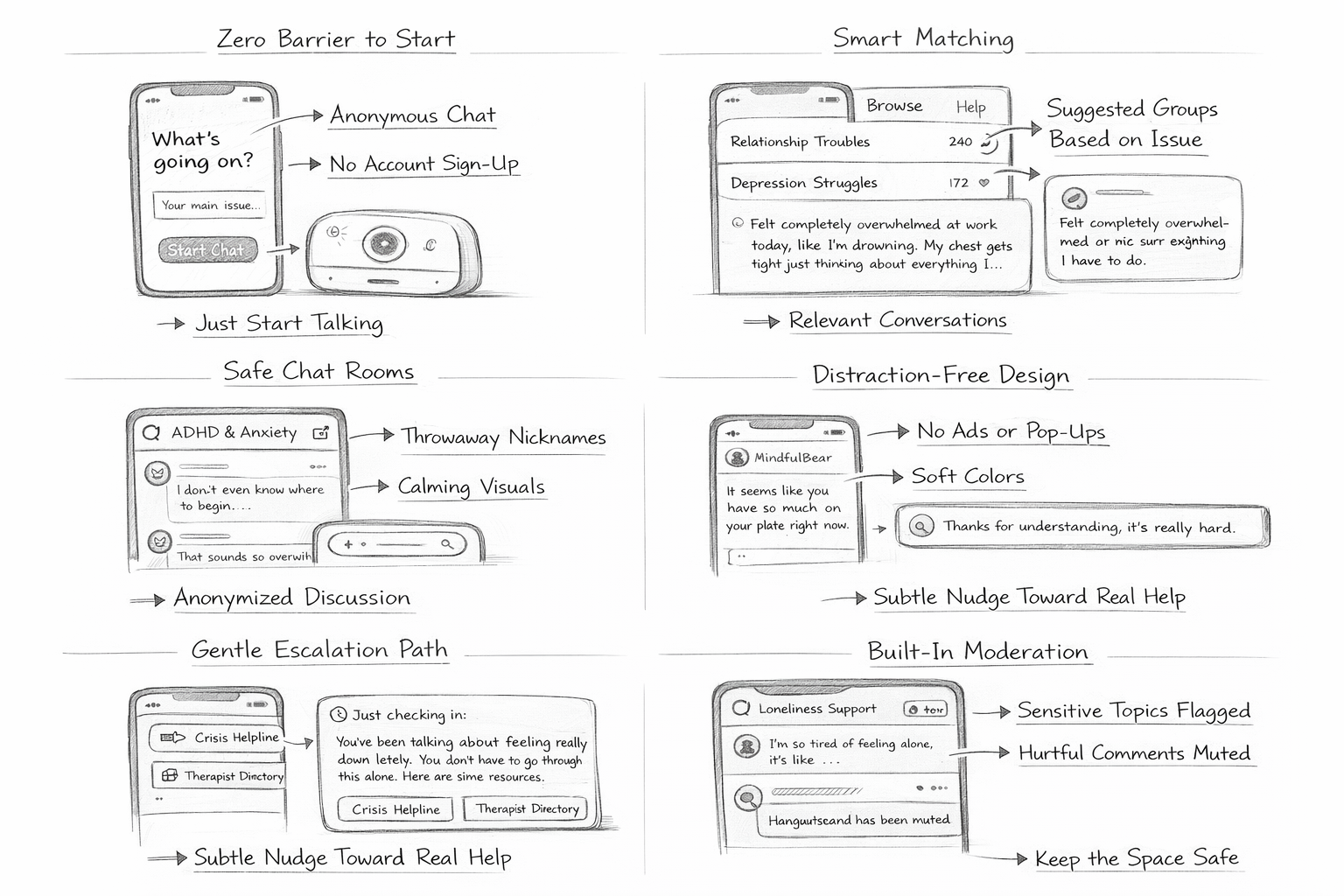
Designed flows that minimize any friction that could stop someone from reaching out — no registration, no email, no identity required.
Build a calming system
Created a visual language that feels more like a friend's living room than a hospital — soft colors, gentle typography, distraction-free layout.
Anonymous peer support with a gentle path to real help.
Anonycare is a completely anonymous peer support platform. You can share what you're dealing with, read stories from people in similar situations, and have real conversations without anyone knowing who you are.
There's also a gentle path toward professional resources. If the system detects that someone might need more than peer support, it nudges them toward real help without being pushy — a subtle escalation that keeps people safe without breaking the trust of the space.
Sometimes the hardest thing is starting the conversation.