70–80% of the platform's upsell revenue was happening pre-arrival. Once guests checked in, engagement dropped sharply.
Push opt-in rates were stuck at 12%, and promotions fired at fixed times with no connection to what guests were actually doing. The platform wasn't present in the guest's decision-making moment.
The strategy was to stop adding more promotions and start activating at the right moment — three distinct behavioral triggers, each tied to a real guest behavior and emotional state.
Mid-stay revenue was being left on the table.
The symptoms were clear: push opt-in stuck at 12%, promotions firing on a fixed timer regardless of what guests were doing, and in-stay engagement dropping significantly after arrival. The platform wasn't reaching guests when they were actually in a buying mindset.
- Push opt-in rate stuck at 12% — most guests unreachable by push
- Promotions were time-based, not behavior-based
- In-stay engagement dropped significantly after check-in
- Upsell revenue concentrated almost entirely in the pre-arrival window
Three behavioral triggers, each tied to a real guest moment.
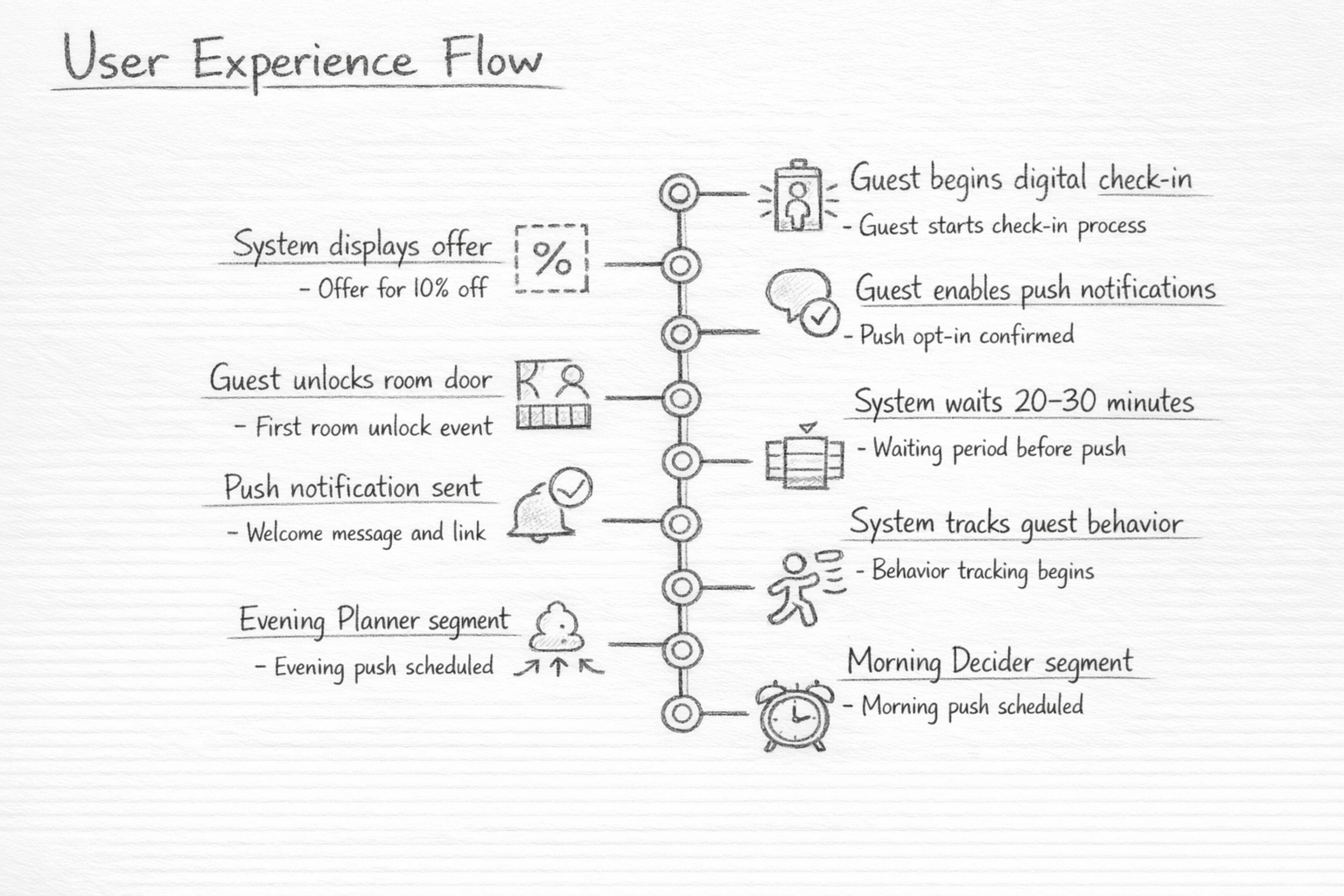
Push opt-in incentive
During onboarding, guests receive 10% off the hotel's most popular service in exchange for enabling push notifications. A clear value exchange at the highest-intent moment of the stay.
First room unlock trigger
20–30 minutes after the first door unlock, guests receive a contextual push inviting them to explore the In-Stay Hub. Cognitive load has cleared; excitement from arrival is still present.
Behavioral planning segmentation
Evening Planners get next-day suggestions at 19:00–23:00. Morning Deciders get same-day suggestions at 07:00–10:00. Right message at the guest's natural decision window.
Built-in safety checks
Frequency caps, capacity-aware promotion, quiet hours, and property-level control — so revenue scales without creating fatigue or harming the guest experience.
Relevance before revenue. Guardrails before scale.
Competitors rely on static, predetermined notification schedules. This system triggers messages dynamically based on real guest behavior and emotional moments — higher relevance, higher conversion, reduced guest fatigue.
The implementation was designed to fit within existing platform infrastructure: no new tools for push delivery, no new software for the In-Stay Hub, just one new integration linking door unlock events to push trigger logic. Classified as High Impact / Medium Effort and recommended for Q2.
Relevance before revenue. Guardrails before scale.